
Purple Horizons – Pollinator Project
Creating sandy nesting sites and boosting key food plants to protect rare species like the Tormentil mining bee in the Midlands’ largest remaining heathland.
This project is run by Walsall Council.
Organisations/groups responsible for the delivery of the project:
Natural England, Birmingham and Black Country Wildlife Trust, University of Birmingham.

Project details
Lowland heath is a rare and special habitat. Around 80% has been lost in the UK over the last 200 years, yet the small areas that remain make up about 18% of the world’s total lowland heath. Heathland grows on poor, acidic soils and is made up of low shrubs, scrub and patches of bare ground. These warm, open conditions are ideal for sun loving wildlife such as reptiles, bees, wasps and ants.
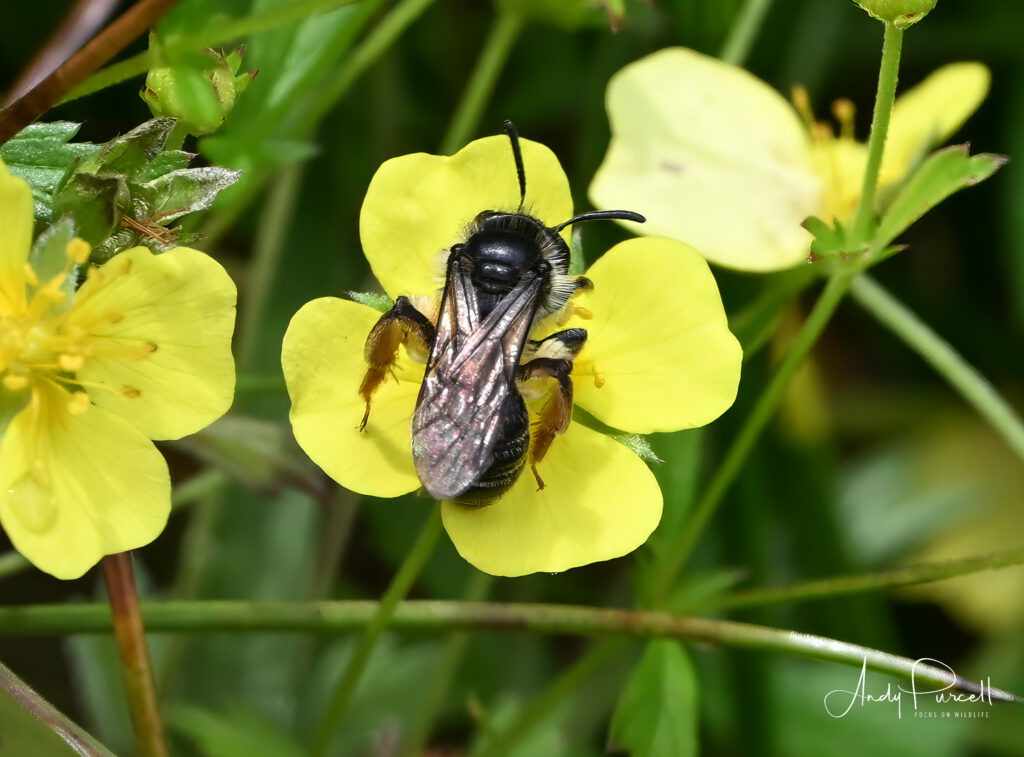
One of these species is the Tormentil mining bee, a small black solitary bee that is now nationally scarce. It relies almost entirely on the flower Tormentil for pollen, so large numbers of this plant are essential for its survival. Female bees dig nesting tunnels in sunny, south facing patches of bare or lightly vegetated ground, often in small banks, where they store pollen to feed their young.
Natural England has already funded work to improve habitats for the Tormentil mining bees. This project aims to build on that success by creating more sandy nesting areas and increasing key food plants, including Tormentil, for threatened species like the Tormentil mining be and the heather mining bee. This project will include the creation of bare ground by scraping off the top layer of vegetation and soil to expose sandy soil. In addition, work will also be carried out enhancing grassland by creating an open sward through harrowing and then adding species rich green hay to introduce new plant species, favoured by the bees.
Scheme / Programme
The Purple Horizons Project is an award winning initiative, supported by Natural England to connect Sutton Park National Nature Reserve with Cannock Chase, the largest heathland in the Midlands. By restoring and linking heathlands and other habitats, the project supports wildlife and helps nature cope with climate change. The Pollinator Project is a key part of this work, supporting bees and other insects by improving their food and nesting areas.
Scale
The scale of this project is 2 hectares.
Project delivery timeline
Bee beach creation needs to happen between October and February each year to prevent impacts on other species. Grassland work needs to be carried out in late summer or early autumn. The project would be ready to start in October 2026 if funded was secured before then. We are looking for funding for another 3 years, at which point progress will be reviewed before launching another phase.
Community involvement
There is ongoing consultation with local residents and Friends of groups regarding the project. The project would be delivered alongside Walsall Conservation Volunteers, Birmingham and the Black Country Wildlife Trust and Corporate Social Responsibility partners.
There would be a programme of events over the three years to continue the work already completed. We anticipate up to 100 volunteers may be involved from the various groups we work with.


Funding secured / committed
Total funding required:
£60,000
If you are interested in supporting this project, contact us using the button below.
Ecosystem services & nature recovery
This project will deliver 15 priority actions in the West Midlands Local Nature Recovery Strategy.
The project will deliver the following environmental, economic, and social benefits:
- B2 - Create new heathland to reconnect with existing heathland
- B3 - Create new species-rich grasslands which are well-connected
- B5 - Reduce barriers to species movement in areas where habitat connectivity is important
- B6 - Collaborate to enable development of large-scale rewilding projects to support nature recovery and greater resilience of biodiversity
Project impact & reporting
The project delivery organisation will provide an annual progress report and a final project report against the following targets:
1 hectares of Dwarf shrub heath improved
Bare ground areas fits into the heathland mosaic.
1 hectares of Acid grassland improved
2 hectares improved
Not creating new accessibility but increasing biodiversity of existing accessible areas.
9 species surveys
Invertebrate sampling will be undertaken twice a year and a flora survey once a year.
WMCA will produce an annual social and environmental impact report detailing the scale of benefits delivered across the region and acknowledging the contributions made by Funding Partners.
Funding
Total funding required:
£60,000
If you are interested in supporting this project, contact us using the button below.
Share this page